

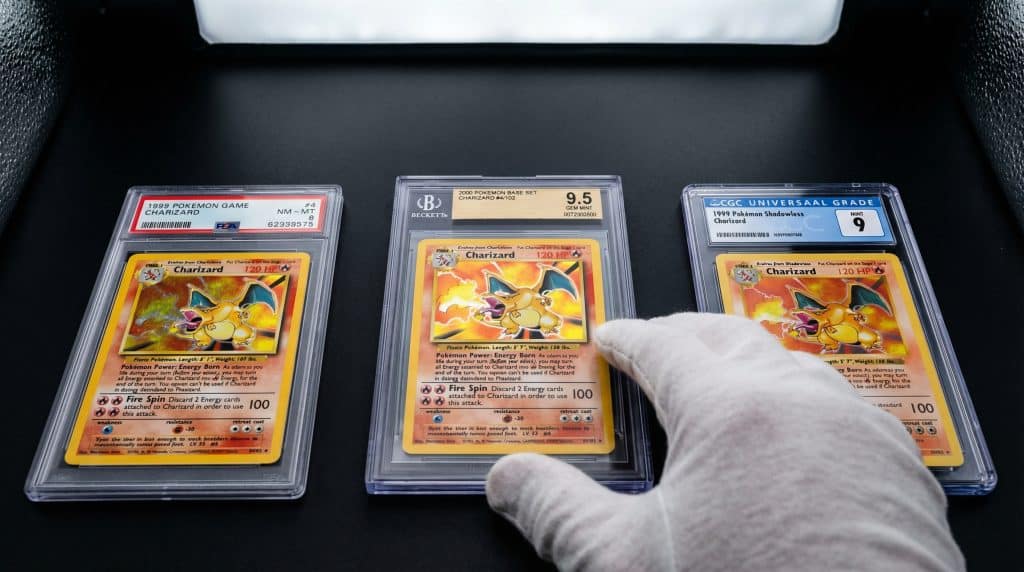
PSA vs BGS vs CGC: Which Card Grader Should You Actually Trust?
If you’ve ever stared at a tiny speck on a holo and thought, “Is that dust… or is that the difference between rent money and ramen money?” welcome. You’re among friends.
Because here’s the maddening truth: a half point (or even a “just not a 10” vibe) can swing your card’s value by a lot. Sometimes by “nice dinner” money, sometimes by “why did I not buy Apple stock in 2009” money. And choosing the grading company PSA, BGS, or CGC can be the difference between a card coming back a hero or coming back… polite.
So let’s talk about the big three the way I’d explain it to you over coffee, while we both pretend we’re not about to send cardboard in the mail like absolute lunatics.
First: why grading matters (beyond the plastic rectangle)
Grading is basically three things:
- Authentication (aka “yes, this is real, not printed in someone’s basement”)
- Protection (slab = tiny museum case for your tiny treasure)
- Pricing (buyers love an “official” number because it saves them from thinking too hard)
And yeah grading is a money thing. The same card can sell wildly differently depending on whether it’s raw, a 9, or a 10. But also: grading is an anxiety management thing. A slab is peace of mind you can hold in your hand.
Now, let’s get into the personalities of these grading companies, because they each have… a vibe.
PSA: the popular kid everyone wants to sit with
PSA is the industry giant. They grade an absolutely bonkers number of cards every year, which matters for one big reason:
When you go to sell, the buyer pool for PSA is enormous. More eyeballs, more comps, more people who are specifically hunting “PSA 10” like it’s a Pokémon of its own.
Why people love PSA
- Simple 1-10 scale. No subgrades, no decimals. Just a clean number.
- The market really likes a “10.” It sounds final. It feels like winning.
- They’re a little more forgiving on centering at the 10 level (PSA has been known to allow up to about 55/45 and still hand out a Gem Mint).
So yes sometimes a card that’s a hair off center can still live its best life at PSA.
The thing that makes me twitch about PSA
High volume is great… until it isn’t.
When a company is processing so many cards, collectors do sometimes complain about inconsistency. And if you’re buying older PSA slabs, people often side eye the really old serial ranges (you’ll hear the “pre-4M” talk). I’m not saying “avoid,” I’m saying “use your eyeballs and zoom in like a detective in a crime show.”
PSA is usually best if…
- You want the strongest resale demand and quickest sale
- You’re grading vintage (PSA is basically the default language there)
- Your card is nice but not perfectly centered, and you’re chasing a 10
BGS: the “show your work” grader (and the one that can humble you)
BGS (Beckett) is the opposite of PSA in spirit. PSA is “final answer.” BGS is “here’s the rubric.”
Instead of just one grade, BGS gives you:
- an overall grade
- plus four subgrades: Centering, Corners, Edges, Surface
If you’re the kind of person who wants to know exactly why your card didn’t get the top grade, BGS is soothing. Like a report card for your cardboard.
The magic and the misery of the 9.5
BGS uses half grades (8.5, 9.5, etc.). And here’s where things get annoying:
A BGS 9.5 can be a gorgeous card. Like, “could easily hang with PSA 10s at lunch” gorgeous.
But the market often treats “9.5” like “almost,” so resale can land somewhere between PSA 9 and PSA 10 pricing even when your eyeballs are screaming, “THIS IS A TEN IN SPIRIT.”
The BGS flex: true 10s (and Black Labels)
At the top end, BGS has serious credibility. A BGS 10 is generally viewed as a very tough, consistent grade.
And then there’s the unicorn: Black Label (all four subgrades are 10). That’s the one people whisper about. That’s the one that can command an absurd premium. That’s also the one that will make you clean your card with the delicacy of a museum conservator.
The downside of BGS
BGS turnaround times can be… let’s call them “character building.” If you need speed because you’re selling soon, Beckett can test your patience.
BGS is usually best if…
- You want subgrades (especially on expensive cards)
- You’re grading modern sports where Black Label premiums exist
- You care about transparency when buying/selling (“Look, the surface got a 9, that’s the issue.”)
CGC: the strict one that’s also weirdly affordable
CGC is newer to trading cards (they’ve long been a big name in comic grading), and they’ve built a strong following especially in Pokémon and other TCGs.
CGC’s big appeal is: price + speed, with a reputation for being tighter/stricter than PSA, especially on centering.
The label change that confused everyone (2023)
CGC used to label their top grade as 9.5 Gem Mint. In 2023 they shifted so that top grade reads 10 Gem Mint (more in line with PSA).
Important: the label changed more than the standards. So you’ll see older CGC 9.5s that are basically the same “top tier” as what they now call a CGC 10. When buying, it’s worth paying attention to what era the slab is from so you’re not comparing apples to… slightly relabeled apples.
CGC at the very top: Perfect 10 is brutal
CGC has a Perfect 10, and it’s notoriously hard to hit. Like “you might own the card for ten years and still never see one” hard. People often describe it as rarer than even a BGS Black Label on comparable stuff.
Money and turnaround
CGC is often the most budget friendly of the three (commonly around $12/card), with real world turnaround that can land around a few weeks depending on current volume. Also: no membership requirement to get started, which I appreciate because I already have enough subscriptions draining my life force.
The trade off: CGC slabs often sell for less than PSA for the same “equivalent” grade, because the market is still PSA obsessed.
CGC is usually best if…
- You’re grading modern Pokémon/TCG
- Your cards are lower to mid value and fees matter
- You’re okay with potentially lower resale vs PSA in exchange for cost savings (and stricter grading)
Okay, so who grades “harder”? (aka: where do you have the best shot at a 10?)
This is where people want a clean ranking, but the grading process isn’t a video game with consistent rules across every set, year, and print run. Still, the general vibe:
- PSA: tends to be more forgiving on centering for a 10
- BGS: stricter, and the subgrades expose what’s going on
- CGC: often tighter overall, especially centering. Perfect 10 is extremely tough
Translation: if you’re chasing a 10 and your card isn’t perfectly centered, PSA might be the friendliest door. If you want the grading to “show receipts,” BGS is your nosy but helpful aunt. If you want strict grading and lower fees, CGC is the disciplined one.
What grading actually costs (the part where everyone sighs)
A thing that surprises newer collectors: grading fees aren’t just “one price forever.”
PSA and the membership math
PSA’s cheaper per card pricing is often tied to having a membership (commonly around $149/year for the lowest rates). If you’re submitting a lot, that can make sense. If you’re submitting, like, eight cards a year, the math can get cranky fast.
(Yes, I have absolutely done the “girl math” version of this where I convince myself I’m saving money by spending more money. Don’t be me.)
BGS and the flat fee advantage
BGS often charges more like a flat service fee (depending on level), and one underrated perk is that it doesn’t always punish you for having an expensive card the same way declared value tiers can.
So if you’re grading a higher value card, BGS can sometimes be more competitive than it looks at first glance.
CGC and the budget lane
CGC is usually the easiest on your wallet per card, and you don’t need to join a club first.
“Is this card even worth grading?” (my personal rule of thumb)
I’m going to save you some pain: not everything deserves a slab.
Here’s the break even grading math I use before I even start daydreaming about 10s:
- Under ~$30 raw: usually don’t grade (the fees eat the upside)
- ~$30-$200 raw: CGC can make a lot of sense because low fees can keep the numbers working
- ~$200-$500 raw: PSA is often worth considering for resale strength (especially modern). Vintage can go PSA/BGS depending on your goals
- $500+ raw: PSA if you want the fastest/easiest resale. BGS if you want subgrades and strong top end credibility (and possibly better fee structure depending on tiers)
And please hear me on this: do not assume your card is getting a 10 just because it looks cute in a sleeve. Most “mint to my eyes” cards come back with at least one thing you didn’t notice until the grader did.
My “pick the grader” cheat sheet (steal this)
If you’re standing over your desk with a stack of top loaders and a growing sense of doom, pick based on your actual goal:
Go PSA if…
- You want maximum resale demand and easy comps
- You’re selling soon and want the largest buyer pool
- You’re grading vintage, or you’re chasing a 10 on a card that’s slightly off center
Go BGS if…
- You want subgrades (especially for big money cards)
- You’re aiming for the BGS 10 / Black Label premium
- You’re buying graded and want less “mystery meat” in the grade
Go CGC if…
- You’re grading Pokémon/TCG and trying to keep costs sane
- You prefer stricter grading (and don’t mind PSA usually selling higher)
- You’re submitting a bunch of mid value cards and fee efficiency matters
A quick warning about cross grading (aka “card gambling, but with extra steps”)
Yes, people do the thing where they crack a card out of one slab and resubmit to another company hoping for a higher grade. The classic move is trying to turn a BGS 9.5 into a PSA 10, especially if centering is the main story.
Sometimes it works. When it works on a valuable card, it can bump value enough to matter.
But: it can also go sideways fast. You can spend more money, add more shipping risk, and end up with the same grade… or worse. And if you crack the slab, you’ve also removed the safety net you already had.
My advice: only consider cross grading if:
- the card is valuable enough that the potential upside is meaningful, and
- you’ve looked up recent sold listings for that exact card in those exact grades, and
- you can emotionally handle the possibility that the universe will humble you for sport
The bottom line (so you can stop spiraling)
There isn’t one “best” grader. There’s the best grader for your card and your plan.
If you care most about resale and buyer demand, PSA is still the king. If you want detail and top end toughness, BGS is the most transparent (and the hardest flex at the 10 level). If you want strict grading with lower fees especially in Pokémon/TCG CGC is a solid lane.
Before you submit anything, do yourself one favor: take the card out under good light, tilt it around, and actually look at the surface like you’re auditioning for CSI: Cardboard Edition. Centering, corners, tiny scratches those are the silent grade killers.
Then pick the grader that matches your goal, not your hopes and dreams.
Because your hopes and dreams do not come with subgrades.