

Pokémon cards are rising fast, and many collectors feel curious about how grading works because strong grades can boost value and reveal a card’s actual value.
Collectors want clear answers because grading rules vary by company and can affect a card’s final score.
I remember feeling lost when choosing the best grading company for my Holo Blastoise because every collector kept giving different advice about the grading systems.
The main things they mentioned were the price & time, but I wanted a complete breakdown, so I put together this guide.
I will share how grading companies compare, along with key points that help you make better choices without stressing about confusing information.
Why Get Your Pokémon Cards Graded?
Grading your Pokémon cards helps you know their actual condition and keeps things simple when you want to sell or trade them later.
It adds a trusted score that everyone understands, which makes things feel fair and transparent during deals.
Many collectors like this because it removes doubts and stops arguments about minor scratches or surface marks.
A graded card also sits inside a strong plastic case that protects it from dirt or bending, which helps keep the card safe for many years.
This protection matters a lot because some cards lose value quickly when they even take tiny damage.
Buying and selling become easier when a card is graded because people trust the score, which usually brings higher prices without a hassle.
Top Grading Companies for Pokémon Cards
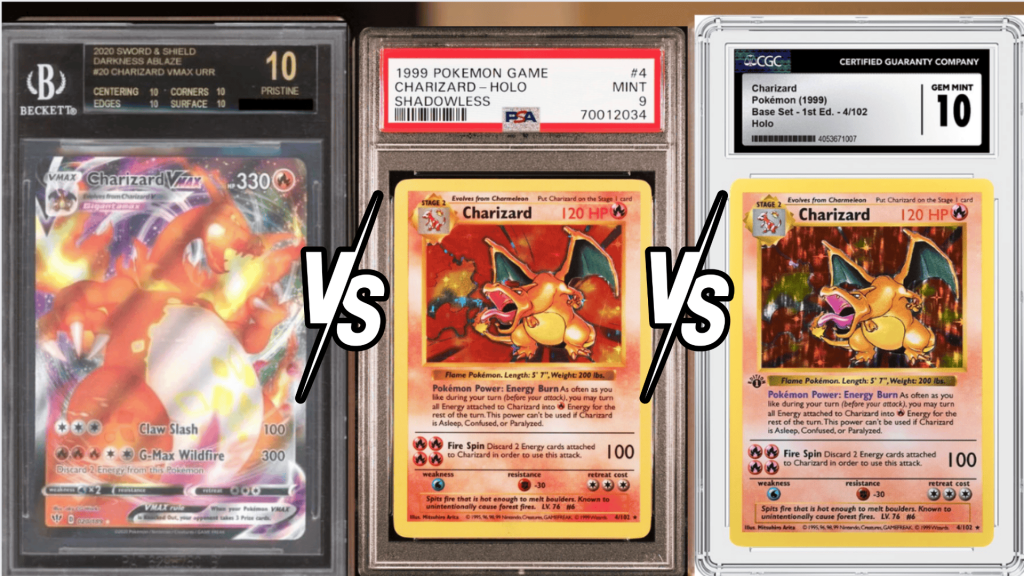
These grading companies are trusted by collectors around the world. Each offers different strengths that affect card value and buyer confidence.
1. Professional Sports Authenticator (PSA)
PSA is the most recognized grading company for Pokémon cards and often sets the standard for card values.
Collectors choose PSA because its grading scale is consistent and widely respected in the hobby. PSA slabs also tend to sell for higher prices on the secondary market.
The company offers population reports that help collectors understand how rare certain grades are.
With strong market demand and clear grading rules, PSA remains a top choice for both new and experienced collectors.
2. Beckett Grading Services (BGS)
BGS is known for providing detailed subgrades, giving collectors a clear breakdown of centering, corners, edges, and surface.
These subgrades help buyers understand exactly why a card received a certain score. BGS slabs are sturdy and well-designed, which many collectors appreciate.
Some high-end cards graded by BGS can earn premium values, especially those with perfect or near-perfect subgrades.
For collectors who want more transparency in the grading process, BGS is a reliable and respected option.
3. Certified Guaranty Company (CGC)
CGC has become a popular grading choice because it offers fast turnaround times and competitive pricing.
Its grading system is strict, which many collectors value for accuracy. CGC also provides subgrades and uses secure, well-sealed slabs that protect cards from damage.
In recent years, CGC-graded Pokémon cards have gained more recognition in the marketplace.
Many collectors use CGC when they want consistent grading without long wait times. This balance of speed, detail, and reliability makes CGC a strong grading option.
4. Sportscard Guaranty Corporation (SGC)
SGC is known for its clean, dark-label slab design and dependable grading standards.
It has a long history in the trading card world, and collectors trust its consistent scoring. While SGC is more commonly associated with sports cards, it has grown in popularity among Pokémon collectors looking for a reliable alternative.
The company often offers faster turnaround than PSA or BGS.
With fair pricing and consistent results, SGC is a solid choice for collectors who want dependable grading without long delays.
PSA vs BGS vs CGC: Key Differences
Choosing between PSA, BGS, and CGC can feel tricky when every collector wants the best results for valuable Pokémon cards.
1. Grading Scale and Strictness
PSA uses a 1–10 scale with a strong focus on eye appeal, while BGS includes detailed subgrades for centering, corners, edges, and surface.
CGC also offers subgrades and is known for strict scoring. BGS tends to grade surface flaws more heavily, and CGC is often considered the toughest overall.
PSA grades can appear simpler, but the company is very consistent.
These differences affect how each company scores the same card, making strictness a key factor for collectors.
2. Slab Design and Presentation
PSA slabs are clean and clear, with a simple label that appeals to many collectors.
BGS slabs are thicker and feel sturdier, offering a premium look with subgrades displayed on the label. CGC slabs are lightweight and scratch-resistant, with a modern design that highlights the card well.
Each style has its fans. Presentation matters because the slab becomes part of how the card is displayed, stored, and valued in the secondary market.
3. Market Value and Demand
PSA-graded Pokémon cards usually carry the highest resale value because the brand dominates the market.
BGS cards can also sell for strong prices, especially when they receive high subgrades or a coveted Black Label. CGC values have grown steadily as more collectors trust its strict grading.
Market demand often depends on what buyers prefer at the time.
For many collectors, choosing a grading company comes down to long-term value and how the card will perform after grading.
4. Turnaround Times and Pricing
PSA is known for longer wait times during busy periods, while BGS can also experience delays. CGC typically offers the fastest turnaround and more affordable pricing.
These differences matter if you want your cards back quickly or need to grade many cards at once.
Prices vary based on declared value, grading level, and optional subgrades. Collectors often choose CGC for speed, PSA for value, and BGS for detailed grading.
Understanding these differences helps you pick the best option for your needs.
5. Population Reports and Rarity Tracking
Population reports show how many cards exist in each grade, and each company handles this differently.
PSA has the most widely used database, giving collectors a clear view of card rarity and market trends. BGS also provides detailed population data, though its numbers are often smaller for Pokémon cards.
CGC offers a growing database with accurate and transparent reporting.
These tools help collectors understand how rare a grade is, which can influence price and long-term value. Reliable reports make planning purchases easier.
6. Consistency and Card Resubmission Results
Collectors often compare companies based on how consistent their grades are over time. PSA is known for steady grading, though some cards receive different results when resubmitted.
BGS can show variation depending on surface flaws or centering, especially when subgrades shift slightly.
CGC has built a reputation for tight consistency, with fewer unexpected changes on resubmission. Consistent grading matters because it builds trust and helps collectors predict results.
When grading feels stable, collectors feel more confident sending valuable cards.
7. Best Choice for Different Collector Types
Each company appeals to a different kind of collector. PSA is often the best pick for people focused on long-term value and strong resale prices.
BGS works well for collectors who want detailed subgrades and sturdy slabs.
CGC is ideal for those who want strict grading, faster turnaround, and fair pricing. Your choice may depend on whether you plan to keep the card, sell it, or showcase it.
Understanding your goals makes it easier to choose the grading service that fits your collection.
Which Grading Company Should You Choose?
Choosing the right grading company really depends on your goals because every collector wants different things when sending Pokémon cards for grading.
PSA works well for people who want the highest resale value, since buyers trust their grades quickly, which helps cards move soon.
BGS appeals to collectors who want detailed subgrades, since they clearly show why a card earned its score.
CGC helps people who want fast results at a lower price, which feels great when grading huge stacks for fun or quick flips.
Each company brings something substantial, so consider your budget, patience, and plans before choosing one.
Many collectors even mix companies based on card value, which helps them balance cost with profit. No single grading service fits everyone because each style suits different collecting goals.
Preparing Your Pokémon Cards for Grading
Getting your Pokémon cards ready for grading matters a lot because even small mistakes can hurt your final grade and cause your cards to lose value quickly.
- Always handle cards with soft gloves, as fingerprints and oils can leave marks that lower grades without you noticing them quickly.
- Slide each card into a penny sleeve carefully so the surface remains protected and scratches are avoided, which could drop your score surprisingly fast.
- Use semi-rigid holders to prevent bending during shipping, as postal handling can damage cards before graders even touch them.
- Never clean or wipe cards with standard cloth, as this can make surfaces look altered and may cause graders to mark them lower for unsafe handling.
- Fill out submission forms with accurate information so the grading company can avoid real-time errors and match your cards to your order.
- Pack everything tightly with padding so nothing shifts during travel, and your cards stay safe inside the box.
- Take photos before shipping so you have proof of condition and avoid mix-ups later if something looks different after grading.
Preparing your cards properly helps you avoid stress and gives you better grades because graders see the cards exactly how you sent them originally.
Conclusion
Choosing the right grading company feels much easier when you understand how each service can shape the value and future of your Pokémon cards because every choice affects your collection in different ways.
Many collectors want fair, accurate grades because they boost confidence and help cards sell or trade more easily.
You can look at your goals and decide what fits your style without stressing because the right choice becomes clear once you understand what each company brings.
Grading feels like a big step, but it becomes simple once you learn what truly matters.
Which grading company do you trust the most for your Pokémon cards? Share with me in the comments below.