

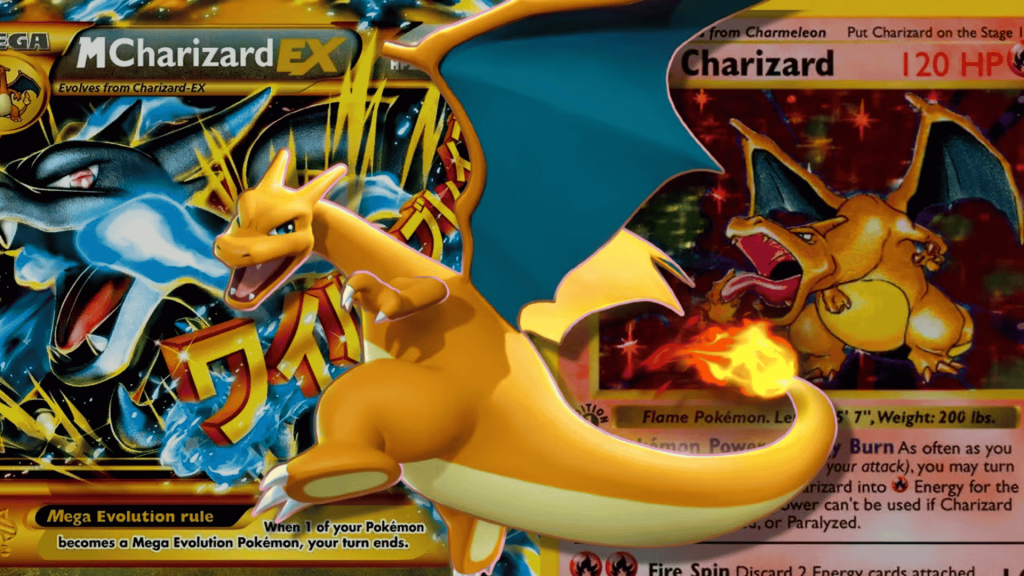
If you have ever pulled a Charizard card from a pack or found one tucked away in an old binder, you know the feeling it brings.
That bold artwork, the fire-breathing pose, and the memories tied to early Pokémon days can stop you in your tracks.
Over the years, this emotional pull has turned Charizard into one of the most talked-about cards in the collecting world.
Some copies sell for pocket change, while others reach prices that surprise even long-time fans. The big question is why one Charizard is worth a few dollars, and another is worth thousands.
Scroll through the blog to learn why Charizard cards are so valuable, how much a Charizard card is worth, how to judge value, spot key details, and make sense of today’s Charizard market.
Why Charizard Cards Are So Valuable?
Charizard cards top the Pokémon Trading Card Game charts due to their massive popularity and standout appeal.
Charizard’s value stems from deep nostalgia; many grew up watching it soar in the 1990s anime and games, sparking lifelong fandom.
Collectors chase it for its cultural status, driving sky-high demand at auctions.
Rarity rises up the price: first-edition Base Set Charizard from Wizards of the Coast’s 1999 print runs are ultra-scarce, with holographic versions fetching millions.
Shadowless and 1st Edition stamps signal low production, untouched by later reprints, making pristine copies collector gold.
How Much is a Charizard Card Worth?
Charizard cards hold value because they mix strong fan demand, limited early prints, and lasting popularity. Prices can swing a lot depending on several factors, so two Charizard cards can look similar but be worth very different amounts.
Keep in mind that the Charizard card values change often, so prices below reflect general market trends in late 2025. Values can fluctuate daily; always cross-check live sold listings.
- Common and modern Charizard cards usually sell for $5 to $50, depending on condition.
- Rare cards from older sets often reach hundreds or even thousands of dollars.
- High-grade vintage Charizard cards can sell for six figures at major auctions.
To get the most accurate value, always check eBay sold listings, TCGPlayer, or PSA auction results.
Things like the year it was printed, how rare the card is, its physical condition, and professional grading all play a big role.
Most Valuable Charizard Cards to Know About
These Charizard cards are the most sought after due to their rarity, age, and strong collector demand. Knowing them helps you spot high-value cards.
1. Base Set Shadowless Charizard (#4/102)
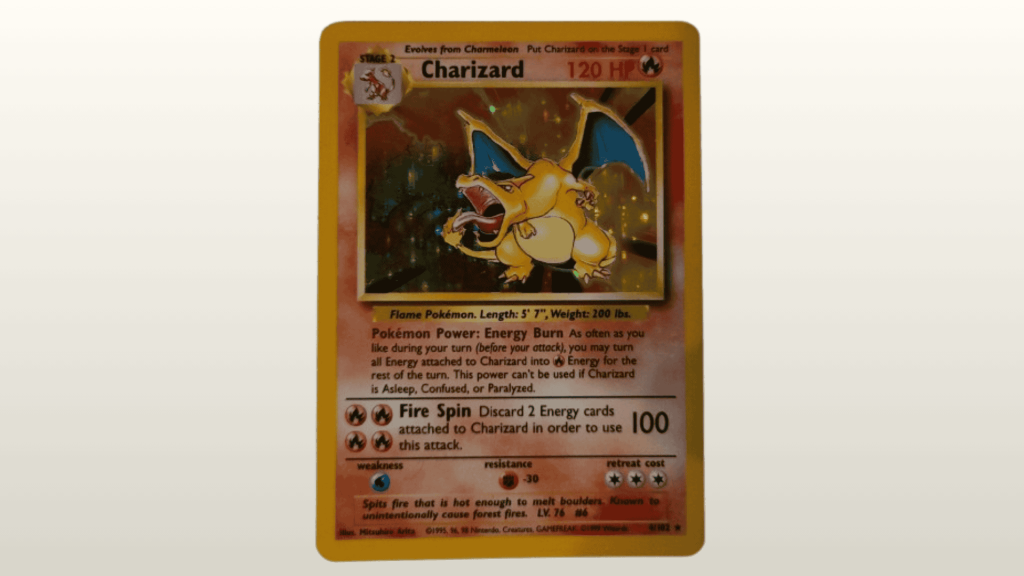
Shadowless Charizard cards come from an early print run and lack the dark shadow around the artwork box.
This small detail makes a big difference in value. These cards are harder to find than Unlimited versions and are highly sought after by collectors.
Ungraded copies often sell between $500 and $2,000, depending on condition.
PSA 10 Shadowless Charizards are extremely rare and can reach prices above $100,000 during strong market periods.
2. Base Set Unlimited Charizard (#4/102)
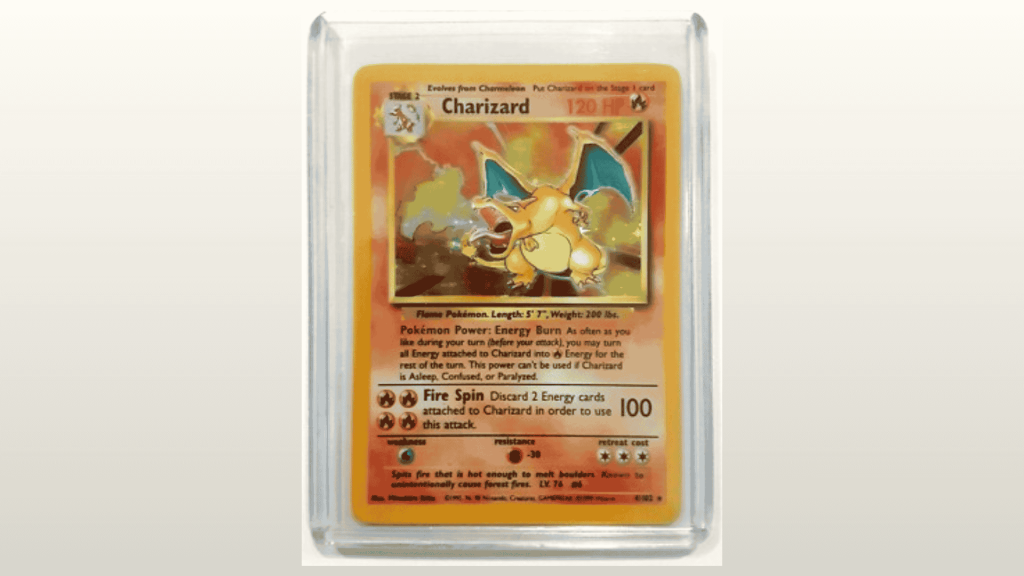
The Unlimited Base Set Charizard is the most common vintage version, but it still carries strong value due to nostalgia and demand.
Printed after the First Edition and Shadowless runs, it has a visible shadow around the artwork.
In good ungraded condition, prices usually range from $200 to $800.
High-grade examples, especially PSA 10s, are far less common and can sell for $20,000 or more, depending on market conditions.
3. Charizard Gold Star (EX Dragon Frontiers #100/101)
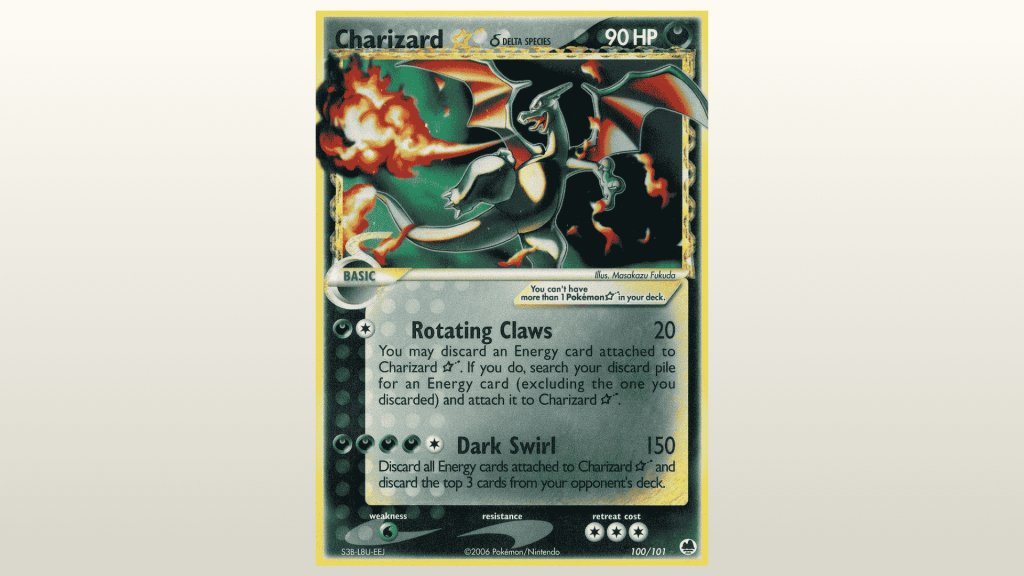
The Charizard Gold Star card is one of the most loved modern-era collectibles.
Released in 2006, it features a shiny Charizard with a gold star next to its name, marking it as a rare pull. Ungraded copies often sell for $400 to $1,000, depending on wear.
High-grade PSA versions are much harder to find and can reach values near $10,000.
Its unique look and limited print make it a favorite among collectors.
4. Charizard VMAX (Champion’s Path Secret Rare #74)
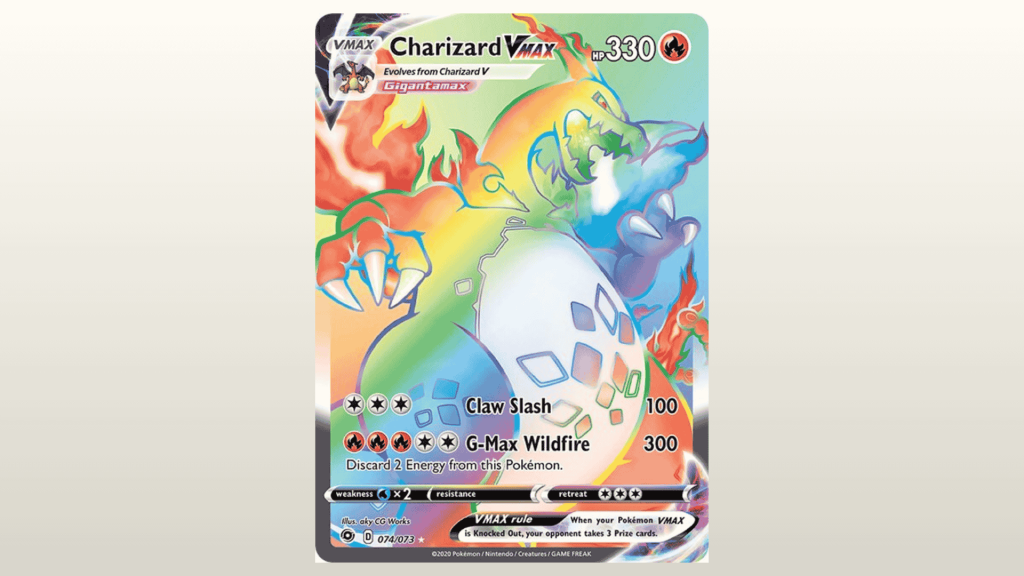
This modern Charizard became an instant hit after its 2020 release.
The rainbow-style artwork and tough pull rates drove strong demand. Near-mint raw copies often sell between $800 and $1,500, especially during peak interest.
PSA 10 versions command even higher prices due to strict grading standards.
While newer than vintage cards, this Charizard remains one of the most valuable modern Pokémon cards thanks to hype and collector interest.
5. Charizard GX (Burning Shadows Secret Rare #150)
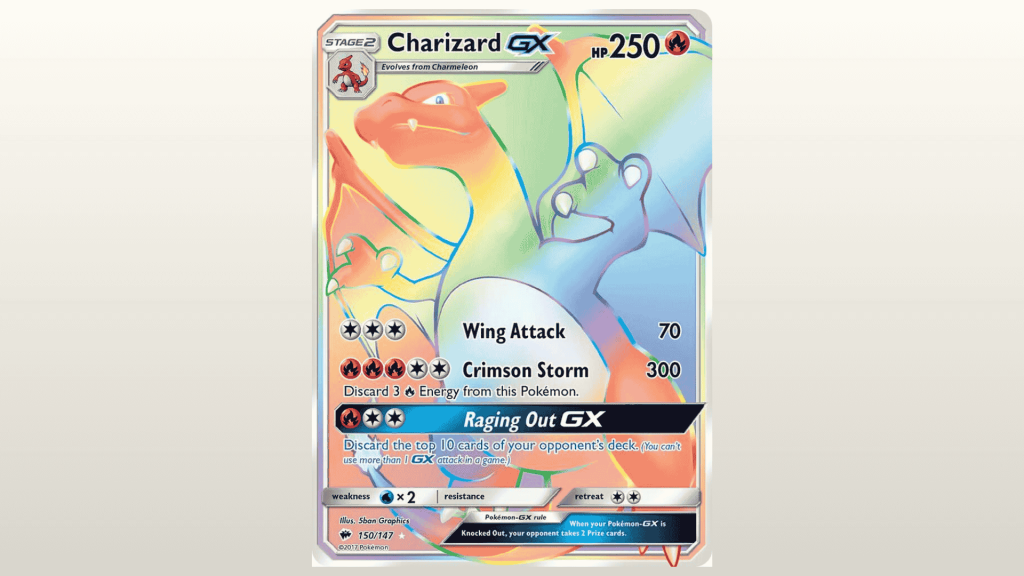
Released in 2017, this full-art rainbow Charizard GX quickly became a chase card.
Pull rates were low, making clean copies harder to find. Ungraded versions usually sell for $300 to $500 in near-mint condition.
PSA 10 graded copies can exceed $1,000, depending on demand.
Although not as old as Base Set cards, this Charizard holds steady value due to its artwork and popularity among modern collectors.
Core Features Affecting the Value of a Charizard Card
Several key factors decide why one Charizard card may sell for a few dollars while another sells for thousands. Small details can make a big difference in price.
- Card Condition and Wear: A Charizard card’s value depends heavily on its condition, including corners, edges, surface marks, and centering.
- PSA, BGS, and CGC Grading Impact: Grading can greatly increase value. PSA grades often sell higher because collectors trust PSA more.
- First Edition vs Unlimited vs Reprints: First Edition Charizard cards are rare and worth the most. Unlimited and reprint versions usually sell for less.
- Set Symbol, Print Run, and Release Year: The set symbol and release year show how rare a card is. Older cards with smaller print runs are more valuable.
- Market Timing and Collector Demand: Prices rise when demand is high and drop when interest slows. Trends can change Charizard values quickly.
How to Check What Your Charizard Card Is Worth?
Finding the real value of your Charizard card is simple if you follow these steps. This helps you get a realistic price without overpaying or underselling.
- Set Symbol: Look for the small icon on the card, usually near the bottom. Each symbol shows the card’s set, such as Base Set or EX series.
- Year and Print Info: Check the text at the bottom of the card for the year and the set name. Wizards of the Coast prints are older and often more valuable.
- Card Number: Find the card number, like 4/102, which helps confirm the exact version. Also, check if the card is holo or reverse holo.
- Edition Details: A 1st Edition stamp means a rare early print. Shadowless cards lack the dark border shadow, while promo cards have special markings.
- Cross-Check Online: Compare your card with trusted Pokémon databases like Bulbapedia to confirm an exact match.
Common Mistakes People Make When Pricing Charizard Cards
Pricing Charizard cards can be tricky. This section highlights common mistakes that can lead to wrong pricing and missed value.
- Using Listed Prices Instead of Sold Prices: Many people assume high asking prices online are real, but only sold listings show what buyers actually pay.
- Ignoring Card Condition Details: Small flaws like scratches or edge whitening can drop the value a lot, even if the card looks good at first glance.
- Confusing Reprints With Original Cards: Reprint Charizard cards often look similar to older ones, but they are usually worth far less.
- Overestimating Ungraded Card Value: Ungraded cards are often priced too high, but grading results are never guaranteed.
- Not Checking Current Market Trends: Charizard prices change often, so relying on old price guides or past sales can lead to inaccurate pricing today.
Should You Sell, Hold, or Grade Your Charizard Card?
Grading makes the most sense when a Charizard card is rare, older, and in very clean condition, since higher grades can increase its value by a large amount.
Before sending a card in, use simple break-even logic and compare the grading cost to how much more the card could sell for once graded.
Holding a rare Charizard can also be a smart option, as demand usually stays strong over time.
Grading companies like PSA, BGS, and CGC look at four main things: corners, edges, surface, and centering.
Corners should be sharp, edges clean, the surface free from scratches, and the artwork well centered. Even tiny flaws can lower the grade.
Grades usually range from 1 to 10. A PSA 10 means the card is nearly perfect, while lower grades show more wear. Higher grades usually mean much higher value, especially for rare Charizard cards.
Keep in mind that prices move up and down, so checking recent sales helps you decide when to sell or wait.
Conclusion
From common modern prints to rare first editions and graded gems, Charizard cards’ value depends on many details like condition, edition, grading, and market timing.
Knowing how to spot these differences helps you avoid guesswork and make smarter choices with your cards.
For many collectors, a Charizard is more than cardboard; it’s a memory from childhood, a reminder of trading with friends, or the excitement of pulling something special from a pack.
That emotional tie is part of why Charizard continues to shine year after year. Now that you understand how values work, take the next step.
Do you have one of these rare Charizard cards?
Check your own collection, compare recent sales, and decide if your Charizard is best kept, graded, or sold.
Start by identifying your card today and see what it may truly be worth.