
When I first experimented with circle crosshairs in Valorant, I realized how much they could change the way I approached aiming.
Unlike traditional crosshairs, a clean circle helps me focus directly on my target without unnecessary distractions.
It gives me a clearer sense of where my shots will land, especially in intense gunfights where precision matters most.
Over time, I found that specific circle settings improved my consistency, whether I was tapping, spraying, or holding angles.
That’s why I put together this guide to share the best circle crosshair options that have helped me and many other players aim more confidently.
Whether someone wants a minimal dot-like circle or a thicker ring for better visibility, these settings offer great starting points.
Why Circle Crosshairs Are Popular in Valorant?

Circle crosshairs have become increasingly popular in Valorant because they offer a clean, minimal, and highly focused aiming experience.
Their smooth, uniform shape helps players maintain consistent target acquisition without the visual distractions found in more complex crosshair designs.
Many players prefer circle crosshairs for tapping and burst-firing since the enclosed shape naturally draws attention to the center point, improving precision.
The style also works well for recoil control, as the circular outline provides a clear boundary for tracking spray patterns.
Additionally, circle crosshairs are visually appealing and easy to customize, making them suitable for both casual and competitive players.
Their adaptability across weapons and playstyles has contributed to their rise in popularity, further fueled by community recommendations and the influence of content creators.
What Makes a Circle Crosshair Effective?
A circle crosshair is effective in Valorant because it provides a clean focal point, enhancing precision and visual consistency during aiming.
Its symmetrical shape naturally guides the eye toward the center, helping players maintain focus on headshot level and target alignment.
The curved outline also minimizes visual clutter, making it easier to track enemies during fast duels.
Unlike traditional crosshairs with multiple lines, a circle provides a stable reference point for both tapping and controlled spraying.
It works exceptionally well for players who prefer minimalism or struggle with distraction from moving crosshair elements.
The circle design can also improve tracking with automatic weapons, as the smooth perimeter gives a clear boundary for recoil management.
Overall, its simplicity, clarity, and adaptability make it a highly effective aiming style.
Various Crosshair Designs Available for Valorant
Valorant offers multiple crosshair styles, each supporting different aim techniques, visual preferences, and playstyles.
1. TenZ Crosshair

This crosshair displays a small cyan center dot paired with short inner lines and medium outer lines, featuring no outlines for clean visibility.
The cyan color (code 5) contrasts sharply against dark backgrounds. Its specialty lies in minimalism, enabling precise headshot flicks during rapid engagements.
Popularity stems from TenZ’s Radiant-level dominance and consistent VCT performances, inspiring pros and casuals alike to copy its code for a competitive edge in Sentinels matches.
2. Zekken Crosshair

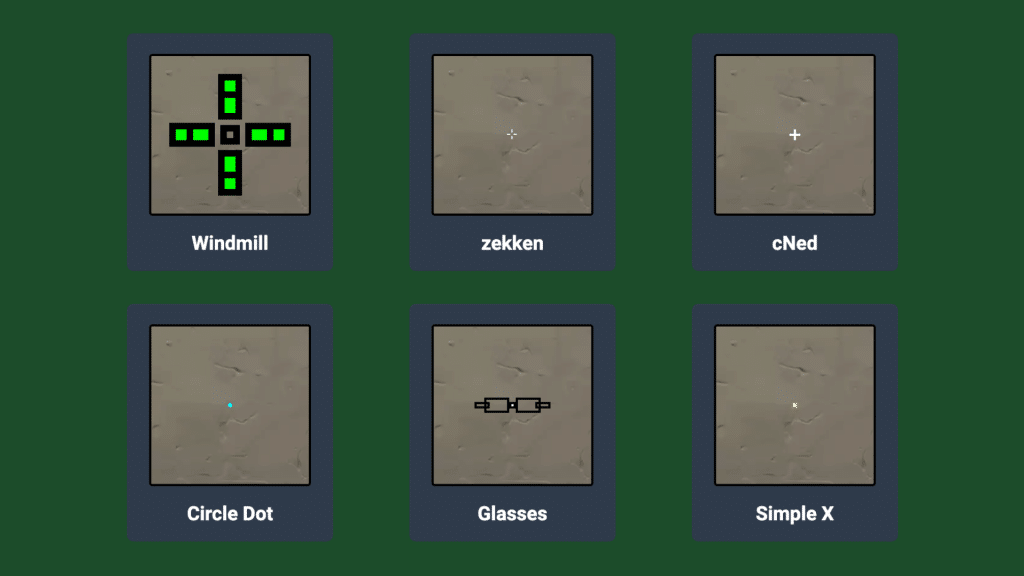
It presents a clean white (FFFFFF) design with dual inner and outer lines both set to length 2, complemented by thick outlines (1/1/3) for enhanced definition.
The symmetrical structure features no gap, ensuring perfect centering for consistent aim alignment.
Its specialty shines in entry fragging scenarios, offering balanced visibility that cuts through chaotic smokes and sprays during aggressive pushes.
3. Aspas Crosshair

It showcases a vibrant cyan design with thick outlines (thickness 2/2/2), featuring inner lines of length 3 and a precise gap of 2 for optimal centering.
The bold red inner and outer lines create exceptional screen pop against any map background, ensuring visibility during intense firefights.
Its specialty excels in aggressive duelist sprays and tracking, providing stability for sustained bursts while maintaining headshot precision.
3. cNed Crosshair

Its specialty excels in pinpoint flicks and quickscoping, particularly for duelists needing split-second headshot alignment during wide swings.
Popularity exploded from cNed’s FNATIC VCT mastery, including Champions triumphs that showcased its effectiveness in grand finals pressure.
Aspiring pros and high-elo players copy the code religiously for its uncluttered purity, eliminating peripheral distractions to focus solely on enemy hitboxes.
4. Yay Crosshair

This basic layout prioritizes utility without visual interference during critical moments.
Ranked players adopt it for smokes, mollys, and retakes where consistency trumps complexity, ensuring reliable crosshair placement under duress.
The minimalist white design maintains visibility across all maps, appealing to teams emphasizing communication over mechanical flash, establishing it as the practical choice for in-game leaders.
5. Asuna Crosshair

It features an outlined cyan cross with inner lines at length 2 and thin line thickness, disabling firing error for unwavering stability.
The subtle design emphasizes precision without drawing attention from targets.
Its specialty shines in sentinel sprays and site holds, delivering controlled recoil patterns during defensive engagements.
6. f0rsakeN Crosshair

f0rsakeN’s crosshair employs a cyan outlined cross with inner lines at length 1 and outer lines at length 3, disabling movement error for consistent stability.
The design balances subtlety with definition, ensuring reliable target tracking across varied engagements.
Its specialty suits controller roles, providing smooth lineups through smokes and versatile utility deployment in team fights.
7. Shroud Crosshair

It embodies pure minimalism as a simple green dot without any lines, incorporating the firing error function for dynamic adjustment under recoil.
The clean cyan/green coloring delivers universal standout visibility across all Valorant maps and lighting conditions.
Its specialty focuses on raw aim training and instinctive flicks, eliminating distractions to hone mechanical skill in fast-paced engagements.
8. Tarik Crosshair

Tarik’s crosshair employs thick white lines at length 1-2 with dual outlines, forming a bold, busy yet highly visible marker across all lighting conditions.
The robust construction withstands chaotic screen clutter during team fights. Its specialty caters to content creation and hype plays, delivering reliable tracking for highlight montages.
Popularity explodes through Tarik’s streaming empire and clutch commentary, making it a casual favorite in unrated and social lobbies worldwide.
9. Subroza Crosshair

Its specialty optimizes mid-range duels and anchor positioning, offering controlled cursor movement without obstruction.
Popularity spreads through Subroza’s coaching pedigree and analytical VCT breakdowns, influencing teams adopting refined setups.
Aspiring analysts copy the code for ranked improvement, valuing its balance between presence and subtlety across agent kits.
Circle Crosshair vs. Traditional Crosshairs
Circle crosshairs and traditional crosshairs each offer distinct advantages depending on playstyle and personal preference.
| Feature / Aspect | Circle Crosshair | Traditional Crosshair |
|---|---|---|
| Visual Focus | Provides a centered, enclosed aim point that draws attention to the middle | Relies on intersecting lines that guide aim direction |
| Target Visibility | Clear center view with hollow or minimal ring | Lines may obstruct small or distant targets |
| Recoil Tracking | Smooth boundary helps gauge bullet spread | Line spacing can make recoil patterns easier to read |
| Precision Tapping | Excellent for headshot-focused tapping | Strong for tapping but depends on line thickness |
| Customization Options | Fewer shapes, but adjustable size and outline | Highly customizable with many line-based variations |
| Player Suitability | Best for minimalists and precision aimers | Works for all styles, especially spray-heavy players |
Common Mistakes to Avoid with Circle Crosshairs
Using a circle crosshair can be effective, but certain mistakes limit its performance. Avoiding common errors helps maintain accuracy, visibility, and comfort during gameplay.
• Making the circle too large
• Choosing overly bright colors
• Blocking target visibility
• Switching designs too often
• Using inconsistent thickness
With the right adjustments, a circle crosshair stays clean, reliable, and supportive of better aim.
Conclusion
After testing different circle crosshair styles, I’ve realized how much a clean, well-designed crosshair can influence comfort, confidence, and consistency in Valorant.
Finding the right circle crosshair isn’t about copying a single perfect setting; it’s about understanding what feels natural and supports the way I aim.
Some rings gave me better recoil control, while others helped me focus more on headshots.
What mattered most was choosing a design that stayed visible without distracting me during intense fights.
By experimenting with size, thickness, color, and outlines, I eventually found a setup that improved my precision and overall gameplay.
I hope these settings help others discover their own ideal circle crosshair and gain the same sense of control that made aiming more enjoyable for me.